Case Studies
Curious to explore how our AI analysis achieves digital authentication?
Browse through our case study articles showcasing how our advanced AI system expertly navigates even the most enigmatic pieces of art.
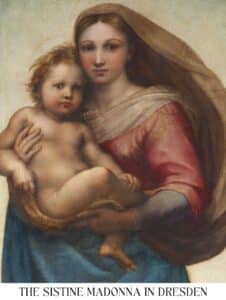
Raphael: “The De Brecy Tondo”
The art world was take aback in early 2023 when the de Brecy Tondo Madonna was labeled a Raphael masterpiece through AI analysis by Bradford University, revealing a 95% similarity to Raphael’s Sistine Madonna. However, our technology yielded an unexpected outcome.
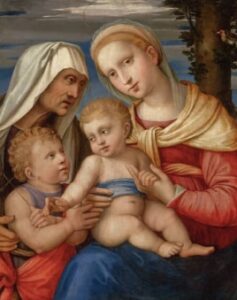
Raphael: “Flaget Madonna”
This case study takes you through the process of authentication of the remarkable story behind the “Flaget Madonna,” a painting discovered in the English countryside in 1995. Learn about Raphael’s unique style and techniques that defined the Renaissance era, follow our client’s quest to authenticate this masterpiece, and witness the intersection of cutting-edge technology and historical analysis.
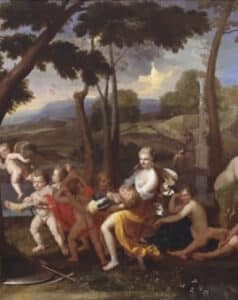
Nicolas Poussin: “Armide and Renaud”
A French private collector commissioned us the authentication of his artwork Armide and Renaud assumed to be by Nicolas Poussin (1594 -1665), an extraordinary French Baroque painter. Our AI deemed the work authentic. Our findings together with the expertise provided by Christopher Wright are revealing considering the artwork is very similar to the one in the Gemäldegalerie in Berlin.
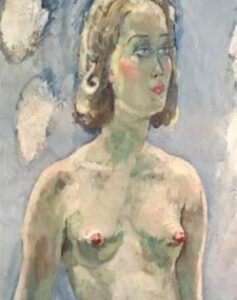
Kees van Dongen, “Nu en buste”
Kees van Dongen was a Dutch-French painter and one of the leading figures in the Fauve movement at the beginning of the 20th century. In the last two decades, two almost-identical versions of a painting entitled “Nu en Buste” attributed to him were brought to auction. The owner of one of the versions turned to Art Recognition to bring clarity to an intricate story…
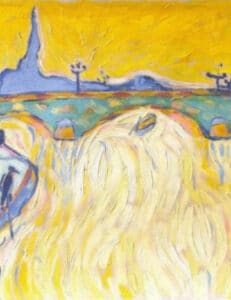
Max Pechstein: “Seine Bridge with Freight Barges”
Star forger Beltracchi has produced numerous paintings in the style of various artists. ‘Seine bridge with freight barges’ was particularly elaborate, as experts found out that he used a projector to learn the artist’s brushstroke. Nevertheless, the algorithm developed at Art Recognition has discovered the mismatch, and classified the piece as fake with very high probability.
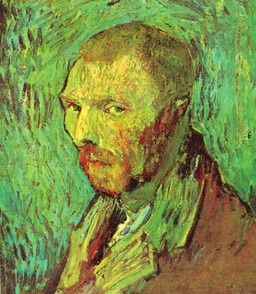
Vincent van Gogh, “Self-portrait”
A leading van Gogh expert asked us in 2019 to authenticate several paintings by the Dutch impressionist, among them the controversial “Self-portrait” from The Oslo National Museum. The result of our analysis – it’s authentic! – was confirmed only weeks later through extensive, extraordinary research conducted by the van Gogh Museum in Amsterdam.